
SPF for Contractors
Insulation Innovation: The Power of SPF.
RESOURCES
CONTACT
Insulation Innovation: The Power of SPF
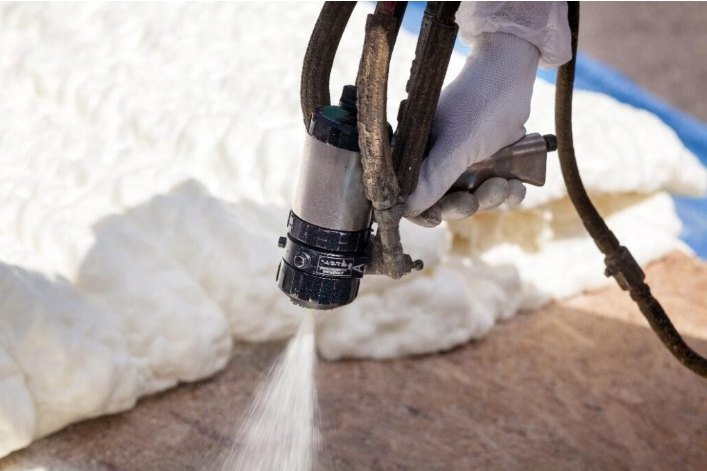
Spray polyurethane foam outperforms traditional insulation on energy savings, structure, air quality and moisture control. Here is what builders, designers and installers need to know: key advantages, how SPF compares with other materials, its technical characteristics and the investment it represents for your customers.
Key Advantages of SPF Innovation
Immediate Energy Savings
Reduces air conditioning (HVAC) consumption by 30% to 50% by eliminating air leaks.
Structural Integrity
Closed-cell foam increases wind and impact resistance in walls and roofs.
Indoor Air Quality
By creating an airtight seal, it prevents the entry of dust, pollen, allergens and pests.
Humidity Control
Prevents internal condensation, eliminating the risk of mold and harmful fungi.
Noise Attenuation
The seamless foam layer dampens outside noise and sound transfer between rooms.
Fast Re-occupancy
Industry-leading re-entry / re-occupancy: 1 hour at 10 air changes per hour.
SPF vs. Other Insulation Materials
| Feature | Spray Polyurethane Foam | Glass / Rock Wool | Blown Cellulose |
|---|---|---|---|
| R-value (insulation) | Very high (R-6 to R-7 per inch) | Medium (R-3 to R-3.8 per inch) | Medium (R-3.2 to R-3.8 per inch) |
| Air barrier | Excellent (seals cracks as it expands) | None (requires extra membranes) | Low (suffers from settling) |
| Vapor barrier | Yes (closed cell acts as a barrier) | No | No (affected by humidity) |
| Service life | Permanent (does not deform) | Deteriorates with time and humidity | Settles and loses thickness |
SPF Characteristics
- Exceptional adhesion to framing and metals
- True no-mix formula; easy spraying with consistent performance
- Passes AC377 Appendix X (large-scale fire testing standard)
- NFPA 285 tested (fire propagation of exterior wall assemblies)
- Yield: 950 lb/set (open cell) and 1,000 lb/set (closed cell)
- Maximum lift thickness of 6 inches; additional passes may be applied immediately
Seasonal Application Guidelines
Polyurethane foam reacts to temperature and humidity, so its behavior and performance change with the season.

Summer (85 °F and higher)
- Ambient and substrate temperatures of 85 °F and higher
- A-side / B-side hose temperatures: 130 °F to 135 °F
- Spray pressure: 1,100 to 1,200 psi (static pressure 1,250 to 1,300 psi)
- Material temperature in the drum / day tank: 95 °F or less
Spring & Fall (50 °F to 85 °F)
- Ambient and substrate temperatures from 50 °F to 85 °F
- A-side / B-side hose temperatures: 130 °F to 135 °F
- Spray pressure: 1,100 to 1,200 psi (static pressure 1,250 to 1,300 psi)
- Material temperature in the drum / day tank: 80 °F to 85 °F
Investment and Performance Summary
- Initial investment: spray foam requires a higher budget (it needs specialized professional installation), while fiberglass and cellulose have a low entry cost.
- Long-term savings (payback): spray foam reduces heating and cooling bills by 25% to 50%, recovering the investment in 3 to 7 years.
- Durability: spray foam can last 50 to 80 years without losing its properties, compared to 15 to 30 years for traditional materials.
GET IN TOUCH
NEED HELP? CONNECT WITH US!
Have questions about insulation, pricing, or orders? Contact our experts for personalized guidance and solutions today.”
+ (956) 640-3340
example@email.com
Follow Us
Get the Latest Updates, Join Our Newsletter